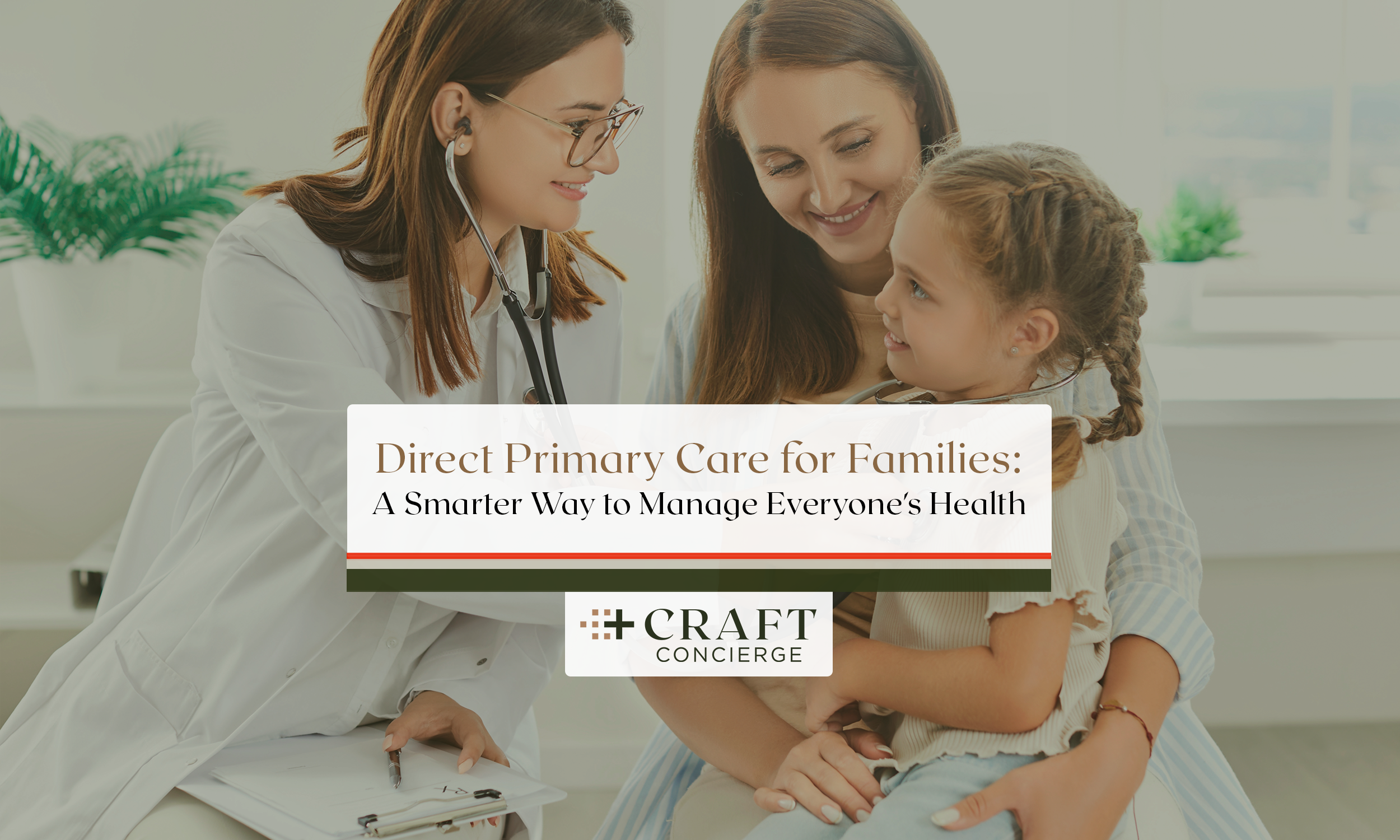

Your kids wake up with fevers on different days. You’re overdue for your annual checkup. Your spouse needs a follow-up on their blood pressure medication. And somehow, you’re supposed to coordinate appointments with three different doctors, navigate conflicting office hours, and rack up copays that weren’t in the budget.
I know this chaos because I’ve seen families trapped in this cycle for years. They’re juggling multiple provider relationships, burning PTO for appointment marathons, and spending Saturdays in urgent care for issues their regular doctor could have handled – if they could actually get an appointment. The traditional healthcare system treats your family like separate transactions rather than connected people whose health affects each other.
That’s where direct primary care for families changes everything. Instead of managing multiple doctor relationships and unpredictable costs, you get one physician who knows everyone, same-day or next-day access when anyone gets sick, and a predictable monthly fee that replaces those surprise copays. Here’s how families are using DPC membership to simplify healthcare while actually improving outcomes.
What Direct Primary Care for Families Actually Means

Direct primary care operates on a membership model rather than fee-per-visit billing. Your family pays a monthly subscription that covers unlimited primary care visits, extended appointment times, and direct access to your physician. No copays. No deductibles for primary care services. No billing headaches.
For families, this means everyone sees the same doctor who understands your collective health history. When your daughter’s asthma flares up, your doctor already knows about the household allergies affecting your son. When you need guidance on your diabetes management, they’re familiar with the family dietary patterns that impact your glucose control. This connected care approach catches patterns that individual providers miss.
The membership typically covers comprehensive primary care services. Same-day or next-day appointments when someone gets sick. Preventive care and annual physicals. Chronic condition management. Minor procedures done in-office. Lab work at significantly discounted rates. And perhaps most valuable for parents – direct communication with your doctor via text, phone, or video during office hours whenever questions arise.
Here’s what sets DPC apart from traditional insurance-based care. In the conventional system, your family doctor rushes through 8-10 minute appointments because they need to see 30+ patients daily to cover insurance billing overhead. In direct primary care, doctors maintain smaller patient panels – typically 600-800 patients instead of 2,500+ – which means they can spend extended time with you, often 30-60 minutes per visit. That’s enough time to address multiple concerns in one visit instead of scheduling separate appointments for each family member’s issues.
The Real-World Benefits Parents Notice First
The difference between traditional primary care and DPC membership becomes obvious in your daily life. Families using direct primary care consistently report the same shifts in how they access and experience healthcare.
Same-day or next-day access when kids get sick – Reach out to your doctor about your child’s fever and get an appointment quickly, often the same day or the next morning. No more choosing between missing work for a pediatrician visit or spending three hours in urgent care. This kind of responsive access prevents minor issues from becoming ER visits.
One doctor for the whole family – Your physician knows everyone’s medical history, family health patterns, and individual health goals. Instead of repeating your story to different providers, you build a relationship with one doctor who understands the big picture. When your teenager develops anxiety, their doctor already knows about the family history of depression and can address it with appropriate context. This continuity improves outcomes while reducing the mental load of coordinating separate provider relationships.
Longer appointments that solve problems – Spending extended time with your doctor – often 30-60 minutes – means you can address multiple concerns in one visit. Discuss your daughter’s nutrition questions and your own blood pressure management in the same appointment. These visits eliminate the frustration of feeling rushed and unheard.
Direct communication during office hours – Text or call your doctor with concerns during the day. Get guidance on whether that rash needs immediate attention or can wait. Ask questions about medication side effects without scheduling a follow-up appointment. For after-hours needs, members have access to a 24/7 urgent support line so you’re never left without guidance when something comes up outside of office hours.
Preventive care that fits family schedules – Schedule multiple family members for their annual checkups on the same day. Knock out sports physicals for three kids in one visit. Coordinate care around your work schedule rather than fitting into narrow appointment windows weeks away. This flexibility saves PTO days and reduces the logistical nightmare of managing family healthcare.
The time savings alone justify the membership for most families. No more burning vacation days for routine appointments. No more Saturdays spent in urgent care waiting rooms. No more phone tag with office staff trying to schedule around everyone’s availability.
How Families Actually Use DPC Membership
Understanding how direct primary care works in practice helps clarify whether it fits your family’s needs. Different families leverage the membership in ways that match their health situations and lifestyle constraints.
Parents managing childhood chronic conditions find tremendous value in unlimited access. When your child has asthma, you need regular check-ins to adjust medications seasonally and address flare-ups quickly before they become severe. Traditional insurance creates barriers here – each visit requires a copay, and getting timely appointments during peak allergy season often means resorting to urgent care. With DPC membership, you contact your doctor when symptoms worsen, adjust the treatment plan, and prevent the escalation that leads to emergency care.
Active families with kids in sports benefit from streamlined preventive care. Sports physicals, injury assessments, and wellness checks happen without the logistical nightmare of scheduling multiple appointments across different providers. Your doctor knows your athlete’s baseline health and can spot issues before they sideline your kid for the season. When your daughter sprains her ankle during soccer practice, a same-day or next-day evaluation determines whether she needs imaging or can recover with rest.
Families dealing with teenage mental health concerns gain significant advantages from extended appointment times and direct communication. Anxiety, depression, and stress management require more than 10-minute check-ins. Having 30-60 minutes to discuss what’s really happening – and the ability to reach your doctor during office hours when concerns arise – creates the support structure that helps teenagers through challenging periods. This ongoing relationship often prevents crises that would otherwise end up in emergency psychiatric care.
Parents managing their own chronic conditions while caring for kids appreciate the efficiency of family care under one roof. When you’re monitoring your diabetes, managing hypertension, or dealing with thyroid issues, the unlimited visits mean you can optimize your health without financial penalties. You check in quarterly or monthly as needed without worrying about copays adding up. Your kids see the same doctor who already understands the household health dynamics affecting your condition management.
The preventive focus catches issues before they become expensive problems. Regular access means your doctor identifies concerning trends during routine check-ins. That slight blood pressure elevation gets addressed before it becomes hypertension requiring multiple medications. The persistent cough gets evaluated before it turns into pneumonia requiring hospitalization. Early intervention saves money and suffering.
The Money Math That Surprises Most Parents

Let’s examine the actual costs families face with traditional insurance versus direct primary care membership. The comparison often reveals that DPC isn’t an additional expense – it’s a replacement for costs you’re already paying while providing significantly better access.
Traditional insurance family costs break down like this. Your family deductible typically runs $5,000-$8,000 annually before insurance covers much beyond preventive care. Each primary care visit generates a $30-$50 copay. Specialist visits cost $50-$75. Urgent care visits – which families with kids use frequently – add up quickly out of pocket. Add lab work copays, imaging copays, and prescription costs. A family of four with moderate health needs easily spends thousands annually on primary care-related costs, even with insurance coverage.
Here’s a realistic example. Two parents and two school-age kids using traditional insurance over one year:
- 8 sick visits throughout the year (kids get sick, a lot) – $400 in copays
- 4 annual checkups – $200 in copays
- 3 urgent care visits for after-hours illnesses – significant out-of-pocket costs
- 2 specialty visits for ongoing issues – $150 in copays
- Lab work and diagnostic tests – $300-$500 in additional costs
- Time off work for appointment marathons – difficult to quantify but substantial
Annual total adds up quickly in direct costs, plus the deductible you’re contributing toward through premium payments and hoping not to fully hit.
Direct primary care membership for the same family looks different. At Craft Concierge, membership tiers range from Core ($149/month) to Vitality ($229/month) to Longevity. Each family member pays their individual tier rate – there are no bundled family plans or reduced rates for additional members. So a family of four would each select the tier that best fits their health needs and pay accordingly.
But here’s what that membership includes that the insurance scenario doesn’t. Unlimited primary care visits with no copays. Same-day or next-day access that helps prevent unnecessary urgent care visits. Extended appointment times that address multiple concerns per visit. Direct physician access during office hours that answers questions without scheduling separate appointments. Significantly discounted lab work and diagnostic testing.
When you factor in the urgent care visits avoided, the ability to address multiple concerns in single visits rather than scheduling separate appointments, and the early problem detection that prevents expensive treatments later, many families find DPC provides better value for their healthcare dollar – delivering dramatically better access and outcomes than traditional insurance-based primary care.
The real value shows up in what you’re not spending. Those urgent care visits for issues your regular doctor could handle? Addressed through your DPC membership with same-day or next-day access. The follow-up visits to adjust your blood pressure medication that generate copays each time? Unlimited in DPC. The specialist visits you need because your rushed primary care doctor couldn’t spend enough time solving the problem? Often prevented by the extended appointments, where your DPC physician can thoroughly investigate issues.
Many families pair DPC membership with a high-deductible health insurance plan for catastrophic coverage and specialist care. This combination provides excellent primary care access through DPC while maintaining protection against major medical expenses through insurance. The monthly premium savings from switching to a high-deductible plan often covers most or all of the DPC membership cost.
What Parents Ask Before Joining

Families considering direct primary care consistently have the same questions. Understanding these upfront helps you evaluate whether DPC fits your situation.
Do we still need regular health insurance? – Yes, and here’s why. DPC covers your primary care needs, but you still need insurance for specialist care, hospitalizations, surgery, emergency room visits, and major medical events. Think of DPC as your primary care layer and insurance as your catastrophic coverage and specialist access. Most families pair DPC membership with a high-deductible health plan that costs less monthly but provides protection when serious health issues arise.
What happens if my child needs a specialist? – Your DPC doctor coordinates referrals just like traditional primary care physicians do. They send records, communicate with specialists, and help you work through the referral process. Your insurance covers specialist visits according to your policy terms. The advantage in DPC is that your doctor spends time making sure the referral is appropriate and well-coordinated rather than rushing through the process during a brief visit.
Can my kids still see a pediatrician if needed? – DPC family medicine physicians provide care for all ages. However, Craft Concierge offers basic pediatric services, so if your child has complex pediatric needs requiring specialized care, you would continue seeing a pediatric specialist for those needs while using DPC for routine primary care. Many families find this combination works well – DPC handles everyday health concerns while specialists manage anything requiring advanced pediatric expertise.
Are immunizations and well-child visits included? – Preventive care and age-appropriate checkups are part of your membership. However, vaccines and immunizations are not included at Craft Concierge. For childhood immunizations, you would coordinate those through a pediatrician or local health department. Clarify what’s included during your meet-and-greet so you know exactly what to expect.
What if we move or need care while traveling? – DPC membership provides care at your practice location. If you move, you’ll need to find a new DPC practice in your new area. For travel, Craft Concierge provides members with access to a 24/7/365 service they can use while out of state in situations where their doctors may not be licensed to practice in that location. Most families also keep their traditional insurance, which provides coverage anywhere for emergencies and specialist needs.
How do we know if this is worth it for our family? – Look at your current primary care usage and costs. Families who benefit most from DPC typically use healthcare frequently (kids who get sick often, parents managing chronic conditions), value immediate access over waiting days for appointments, and want one doctor who knows everyone rather than coordinating multiple provider relationships. If you’re currently avoiding care due to copay costs or appointment availability, DPC likely saves you money while improving access.
Making the Switch to Family-Centered Care

The shift from traditional insurance-based primary care to direct primary care membership represents more than changing payment models. You’re moving from a system designed around billing codes and insurance reimbursement to one designed around your family’s actual healthcare needs.
Most DPC practices offer meet-and-greet appointments where you can talk with the physician before committing to membership. Use this opportunity to ask specific questions about how they handle family care, what their communication access looks like during and outside of office hours, and how they coordinate with specialists and insurance when needed. You’re choosing a long-term healthcare partner for your family, so finding the right fit matters.
At Craft Concierge, our Tulsa and Tampa locations serve families who are looking for a better primary care experience. What we hear consistently from parents is that they appreciate getting real time with their doctor, being able to text with questions during office hours rather than playing phone tag with office staff, and knowing they can get their family in quickly when health issues come up rather than waiting until symptoms worsen.
The membership model works because it aligns incentives properly. When practices don’t rely on insurance billing, doctors can focus on keeping you healthy rather than documenting visits to justify reimbursement. When you’re not charged per visit, you seek care when problems are small rather than waiting until they’re expensive. When your doctor maintains a smaller patient panel – typically around 600-800 patients instead of the 2,000-3,000 common in traditional practices – they have the capacity to see you quickly and thoroughly.
If you’re tired of the coordination chaos, unpredictable costs, and rushed appointments that define traditional family healthcare, direct primary care offers a genuine alternative. You get more time with your doctor, responsive access when health issues arise, and predictable monthly costs that replace the surprise bills currently showing up in your mailbox.
Ready to see how DPC works for your family? Schedule a meet-and-greet at Craft Concierge to discuss your family’s specific healthcare needs and whether our membership model fits your situation. You can reach us by phone or text to set up a time that works around your schedule. Because that’s exactly the point – healthcare that adapts to your family rather than forcing your family to adapt to healthcare’s broken systems.