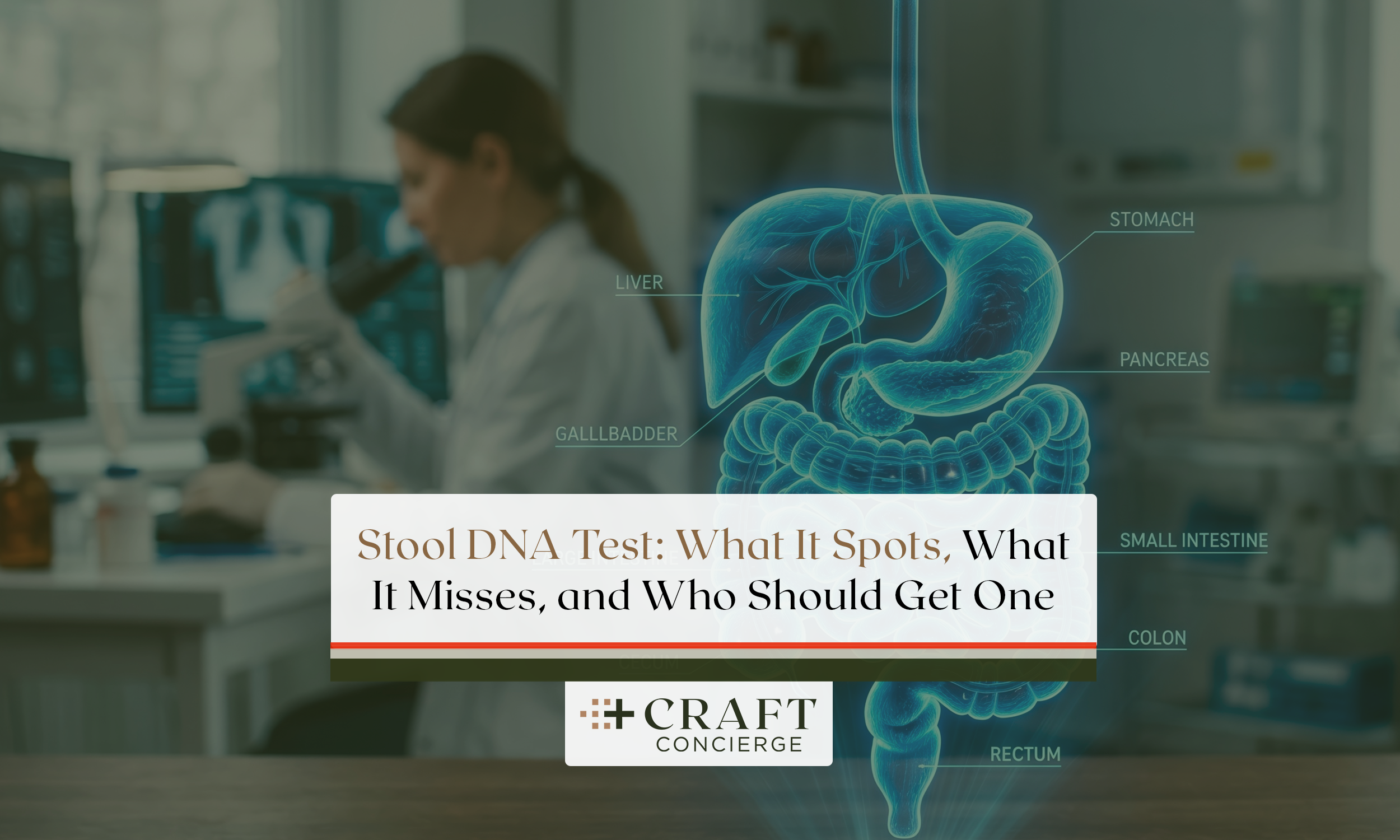

Colorectal cancer is the second leading cause of cancer death in the United States – and one of the most preventable. The gap between those two facts comes down to one thing: screening. Most colorectal cancers that kill people were detectable years earlier, in a form that was entirely treatable. The people who died from them either weren’t screened or weren’t screened effectively.
The stool DNA test has changed the calculus on screening for a meaningful portion of the population. It’s non-invasive, done at home, requires no bowel prep, and in its most current form detects colorectal cancer with sensitivity approaching that of colonoscopy. For patients who have been avoiding screening because they couldn’t face the preparation and procedure involved in a colonoscopy, it removes most of the barriers.
But it isn’t the right test for everyone, and understanding where it fits – what it’s genuinely good at, where its limitations are, and how it connects to a broader preventive care strategy – is the difference between using it as an effective screening tool and using it as a false reassurance.
What a Stool DNA Test Actually Does
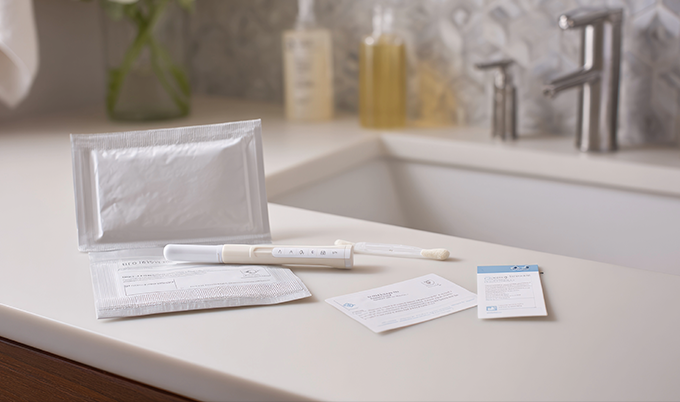
The stool DNA test – most commonly known by the brand name Cologuard – works on a straightforward biological principle. Cancerous and precancerous cells in the colon continuously shed DNA into the stool as they divide and die. Normal colon cells do this too, but cancer cells shed DNA with specific mutations and methylation patterns that healthy cells don’t have. The test detects those abnormal DNA markers, along with traces of blood in the stool that can indicate the presence of a lesion.
The current version, Cologuard Plus (FDA approved October 2024), analyzes a stool sample for ten DNA biomarkers – including mutations in the KRAS gene and methylation changes in NDRG4 and BMP3 – alongside a fecal immunochemical test (FIT) component that detects human hemoglobin. Results from the BLUE-C clinical trial, published in the New England Journal of Medicine, showed cancer sensitivity of 93.9% – meaning the test correctly identified colorectal cancer in nearly 94% of people who had it.
The process from the patient’s side is simple. A physician prescribes the test, a kit is mailed to your home, you collect a complete stool sample using the provided collection system, and you ship it to the lab. Results come back to your physician within approximately two weeks. No diet changes, no bowel preparation, no procedure.
What the Test Spots – and What It Can Miss
The stool DNA test’s strengths are real. It detects colorectal cancer at early stages, including right-sided lesions that older stool tests frequently missed. It picks up precancerous polyps, particularly larger advanced adenomas, that have the potential to become cancer if left untreated. And it does this without any of the physical preparation or procedural risk that makes colonoscopy a barrier for many patients.
Its limitations are equally real and worth understanding clearly.
Specificity is lower than colonoscopy. The test has a false positive rate – meaning some positive results will turn out not to be cancer or significant polyps on follow-up colonoscopy. In the BLUE-C trial, specificity was approximately 90.6% for advanced neoplasia. That means roughly 1 in 10 people with a positive result will undergo a colonoscopy and find nothing clinically significant. This isn’t a reason to avoid the test, but it’s important context for understanding a positive result.
A negative result is reassuring, not definitive. A 93.9% sensitivity rate also means the test misses approximately 6% of colorectal cancers that are present. A negative result substantially reduces your risk but doesn’t eliminate it. Regular screening intervals – every three years for the stool DNA test – exist precisely because no single test provides permanent clearance.
It doesn’t visualize the colon. A colonoscopy does two things: it detects abnormalities and it removes them. When a gastroenterologist finds a polyp during colonoscopy, they typically remove it in the same procedure. A stool DNA test can only detect signals of abnormality – if it finds something, the next step is always a colonoscopy. Patients who are highly likely to have polyps based on their history or risk factors may be better served by going directly to colonoscopy.
It’s not appropriate for everyone. The stool DNA test is indicated for average-risk adults aged 45 and older. If you have a personal history of colorectal cancer, a family history of colorectal cancer or advanced polyps in a first-degree relative, a history of inflammatory bowel disease, or a genetic syndrome that increases colorectal cancer risk, the stool DNA test is not the right screening tool. These patients need colonoscopy surveillance at intervals determined by their specific risk profile.
How It Compares to Other Screening Options
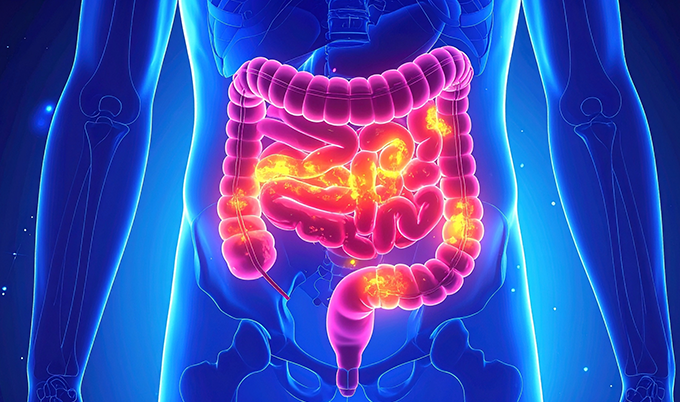
Colorectal cancer screening isn’t a one-size-fits-all decision. The right test depends on your risk profile, your access to procedures, your tolerance for the colonoscopy preparation process, and your ability to follow through if a non-invasive test comes back positive. Here’s how the main options compare:
| Screening Method | Frequency | Cancer Sensitivity | Preparation Required | Best For |
| Stool DNA Test (Cologuard Plus) | Every 3 years | ~94% | None | Average-risk adults 45+ who want non-invasive option |
| FIT (Fecal Immunochemical Test) | Every year | ~79% (cancer) | None | Average-risk adults; lower cost, annual commitment |
| Colonoscopy | Every 10 years | >95% | Full bowel prep | Average risk; elevated risk; removes polyps same visit |
| CT Colonography | Every 5 years | ~96% (large polyps) | Full bowel prep | Patients who can’t complete colonoscopy; still requires prep |
The stool DNA test sits in a specific clinical niche: average-risk patients who need screening and are unlikely to complete it if it requires bowel prep and a procedure. For this group, having an effective non-invasive option with high sensitivity dramatically improves the chance that screening actually happens. A test with 94% sensitivity that gets done is far more valuable than a colonoscopy with 95% sensitivity that gets postponed indefinitely.
Who Should Get a Stool DNA Test
The U.S. Preventive Services Task Force recommends colorectal cancer screening for all adults aged 45 to 75 with average risk – the stool DNA test is one of several approved screening options within that recommendation. You’re a good candidate for the stool DNA test specifically if:
- You are 45 or older with no personal or significant family history of colorectal cancer or polyps. This is the standard indication. Average-risk adults in this group who haven’t been screened or are due for a repeat screening are the primary population the test was developed for.
- You have been avoiding colonoscopy due to the preparation process. The bowel prep required before colonoscopy is the most common reason patients delay or decline screening. If this is your barrier, the stool DNA test is a clinically validated alternative that removes it entirely.
- You want a three-year interval rather than annual testing. Compared to FIT, which requires annual collection, the stool DNA test’s every-three-year interval is more practical for many patients while maintaining high sensitivity.
- You are comfortable with the understanding that a positive result will require colonoscopy. This is a critical piece of informed consent. Anyone who gets a stool DNA test needs to understand before they do it that a positive result means a colonoscopy – and to be committed to following through on that step if it’s needed. The test only works as a screening strategy when the follow-up pathway is completed.
The stool DNA test is not appropriate if you have a personal history of colorectal cancer, colorectal polyps, or inflammatory bowel disease; a first-degree relative who had colorectal cancer or advanced polyps before age 60; a hereditary syndrome such as Lynch syndrome or familial adenomatous polyposis; or symptoms such as rectal bleeding, unexplained weight loss, or changes in bowel habits. These situations require a different clinical approach – typically direct colonoscopy at intervals and ages determined by your specific risk.
Understanding a Positive Result
A positive stool DNA test can produce significant anxiety, and it’s worth understanding what it actually means before interpreting it as a cancer diagnosis. It isn’t one.
A positive result means the test detected abnormal DNA markers, blood, or both in your stool sample. It does not mean you have cancer. It means you need a colonoscopy to determine what caused the signal. Possible findings on follow-up colonoscopy range from colorectal cancer (serious, but detected early and treatable) to advanced precancerous polyps (important to remove, highly curable) to non-advanced polyps or other findings (much less concerning) to nothing clinically significant at all.
Given the test’s specificity rate of approximately 90%, a meaningful proportion of positive results will not find cancer or significant polyps on follow-up. This is called a false positive – the test signaled an abnormality that colonoscopy didn’t confirm. It isn’t a failure of the test; it’s an inherent characteristic of any screening tool that prioritizes sensitivity. The alternative – missing cancers to reduce false positives – is a worse tradeoff.
What matters most when you receive a positive result is having a physician who can explain what it means in the context of your full clinical picture, help you understand what the colonoscopy will and won’t tell you, and coordinate the follow-up efficiently. This is not a result to sit with alone or to process through a patient portal message.
Understanding a Negative Result
A negative stool DNA test is genuinely reassuring – it substantially reduces the probability that you have colorectal cancer or significant precancerous disease at the time of testing. But a few points are important to understand.
First, it’s not a permanent clearance. The test detects disease that’s present at the moment of testing; it says nothing about disease that develops afterward. This is why the test is repeated every three years rather than once. Continuing on schedule matters.
Second, a small number of cancers and polyps won’t generate a detectable signal – the approximately 6% miss rate for cancer means a negative result reduces but doesn’t eliminate risk. If you develop symptoms between tests – rectal bleeding, unexplained change in bowel habits, abdominal pain, unintentional weight loss – those symptoms warrant evaluation regardless of when you last had a negative screening test.
Third, a negative stool DNA test doesn’t evaluate other parts of the gastrointestinal tract or provide information about other aspects of digestive health. It answers a specific question about colorectal cancer risk signals. Other screening tests serve other purposes.
How This Fits Into Preventive Care – and Why the Ordering Physician Relationship Matters

The stool DNA test is most valuable when it’s part of a proactive, coordinated approach to preventive care rather than a standalone transaction. Two things go wrong when it isn’t.
First, patients who order the test without a physician relationship often don’t have someone to call when the result comes back positive. The positive result requires follow-up colonoscopy – which requires a referral, coordination with a gastroenterologist, and a physician who can contextualize the finding against your full medical history. Without that relationship in place, a positive result can become a frightening data point that sits unaddressed for weeks while a patient tries to navigate specialist access independently.
Second, the stool DNA test is one piece of colorectal cancer risk assessment, not the whole picture. A thorough preventive care approach also evaluates your family history carefully, identifies whether you’re in the average-risk category the test is designed for or whether your risk profile actually warrants direct colonoscopy surveillance, and integrates your colorectal cancer screening with other age-appropriate preventive screenings happening in the same timeframe.
In a traditional primary care setting, there often isn’t time for this level of coordination. A 10-minute visit doesn’t accommodate a thorough risk stratification conversation, a review of which screening modality is actually right for you, and a plan for what happens if the result comes back positive.
The care model at Craft Concierge is built for exactly this kind of preventive coordination. Extended appointments mean time to review your complete family history, walk through your colorectal cancer risk profile, determine whether the stool DNA test is the right option for your specific situation or whether colonoscopy referral is more appropriate, and have a real conversation about what a positive result would mean before you take the test. If your result comes back positive, you’re not starting from scratch with a new specialist – you have a physician who already knows your history and can coordinate the next step with you.
Colorectal cancer screening is one of the clearest examples of preventive medicine working the way it’s supposed to. The cancer that kills people is the same cancer that was entirely detectable – and curable – years earlier. The stool DNA test makes that detection more accessible than it’s ever been. Using it well is the part that requires a physician who has time for you.
If you’re 45 or older and haven’t been screened for colorectal cancer, or if you’re due for a repeat screening and have been putting it off, schedule a meet-and-greet at our Tulsa or Tampa location. This is a conversation worth having – and one that deserves more than a rushed appointment.
Frequently Asked Questions
What is a stool DNA test and how does it work?
A stool DNA test – most commonly Cologuard – screens for colorectal cancer and precancerous polyps by detecting abnormal DNA markers and blood in a stool sample. Cancerous and precancerous cells shed DNA with specific mutations and methylation changes into the stool as they divide. The test identifies those markers using laboratory analysis of a stool sample collected at home and mailed to a lab. The current version, Cologuard Plus, analyzes 10 DNA biomarkers and detects colorectal cancer with approximately 94% sensitivity.
Who should get a stool DNA test?
The stool DNA test is recommended for average-risk adults aged 45 to 75 who have no personal history of colorectal cancer or polyps, no first-degree relative diagnosed with colorectal cancer or advanced polyps before age 60, and no conditions that increase colorectal cancer risk such as inflammatory bowel disease or hereditary syndromes. It’s particularly well-suited for patients who have been avoiding colonoscopy due to the preparation required. Anyone outside the average-risk category should discuss colonoscopy-based surveillance with their physician instead.
How accurate is the stool DNA test?
The current Cologuard Plus test demonstrated 93.9% sensitivity for colorectal cancer in the BLUE-C clinical trial – meaning it correctly identified cancer in nearly 94% of people who had it. Specificity for advanced neoplasia was approximately 90.6%, meaning roughly 1 in 10 positive results will not find significant disease on follow-up colonoscopy. These are strong performance characteristics for a non-invasive screening test, comparable to colonoscopy for cancer detection though slightly lower for detecting smaller precancerous lesions.
What happens if my stool DNA test comes back positive?
A positive result does not mean you have cancer – it means the test detected signals that require further investigation. The next step is always a colonoscopy, which will determine whether the positive result reflects cancer, precancerous polyps, or a false positive finding. Your physician should explain what the positive result means in context, coordinate the colonoscopy referral, and be available to discuss the findings once the follow-up procedure is complete. This is why having an established physician relationship before you take the test matters.
How often do you need a stool DNA test?
The stool DNA test is recommended every three years for average-risk adults. This is less frequent than FIT (annual) but more frequent than colonoscopy (every 10 years for average-risk individuals). The three-year interval reflects the test’s high sensitivity combined with the recognition that cancer and polyps can develop in the interval between tests. If your result is positive and you complete follow-up colonoscopy with normal findings, your physician will advise on the appropriate rescreening interval based on those findings.
Does a stool DNA test replace colonoscopy?
No – but for average-risk patients, it’s a validated alternative to colonoscopy as a primary screening method, not a lesser substitute. The key difference is that colonoscopy both detects and removes polyps in the same procedure, while the stool DNA test only detects. If the stool DNA test comes back positive, colonoscopy is the required follow-up. For patients at elevated risk or with a history of polyps, colonoscopy surveillance is typically more appropriate than stool-based testing. For average-risk patients who won’t complete colonoscopy, the stool DNA test is a clinically sound option that substantially increases the chance screening happens at all.
Is the stool DNA test covered by insurance?
The stool DNA test is covered by Medicare for average-risk adults aged 45 and older every three years. Most major commercial insurance plans cover it as well, though coverage terms vary. It requires a physician’s prescription – it isn’t available over the counter. At Craft Concierge, ordering the stool DNA test as part of your preventive care plan is included in your membership. If you have questions about coverage under your specific insurance plan, our team can help clarify what to expect before ordering.
Can you do a stool DNA test if you have hemorrhoids?
Hemorrhoids can cause blood in the stool, which may trigger a false positive result on the FIT component of the stool DNA test. If you have active hemorrhoid bleeding or other non-cancer sources of visible rectal bleeding at the time you plan to collect the sample, you should wait until the bleeding has resolved before using the kit. It’s worth discussing this with your physician before collecting, particularly if hemorrhoid-related bleeding is a recurring issue for you. In some cases, your physician may recommend colonoscopy rather than the stool DNA test if bleeding sources make accurate interpretation difficult.
What’s the difference between a FIT test and a stool DNA test?
Both are non-invasive, at-home stool-based tests for colorectal cancer screening. FIT (fecal immunochemical test) detects only blood in the stool and is done annually. The stool DNA test combines FIT’s blood detection with analysis of abnormal DNA markers shed by cancerous and precancerous cells, and is done every three years. The stool DNA test has higher sensitivity for cancer and advanced polyps than FIT alone, but also has a higher false positive rate and higher cost. For patients who prefer annual testing with a simpler process, FIT is a reasonable option. For those who prefer less frequent testing with higher single-test sensitivity, the stool DNA test is the stronger choice.