

You got the test. The number came back zero. Your doctor said that’s good news – low risk, no calcified plaque, nothing to worry about.
But you’re still worried. Your cholesterol is elevated. Your father had a heart attack at 59. You’ve had diabetes for years, or high blood pressure that’s never fully controlled. Something doesn’t sit right about being told you’re fine when the underlying risk factors are still there.
That unsettled feeling has a clinical basis.
A calcium score of 0 measures only one type of plaque in your arteries: the calcified, hardened kind. The soft, non-calcified plaque that causes most sudden heart attacks is invisible to calcium scoring entirely. Research published in JACC confirms that a zero calcium score does not rule out the presence of dangerous, non-calcified plaque – particularly in younger patients and those carrying established cardiovascular risk factors.
When a physician hands you a zero and tells you to come back in five years, that plan may be appropriate for a healthy 65-year-old with no risk factors. For a 48-year-old with elevated LDL and a family history of early cardiac events, the same zero deserves more scrutiny.
At Craft Concierge, we’re direct about this with patients: a calcium score of 0 is one piece of evidence, not a clinical clearance. The number means something specific, and understanding what it does and doesn’t measure is the first thing we work through together.
What a Zero Calcium Score Actually Measures
The number on a calcium score is built around one biological event: calcification. When plaque in coronary arteries ages and hardens over time, it becomes visible on a CT scan. Fresh plaque – the kind still made of soft, lipid-rich material – does not show up at all.
Coronary artery calcium scoring is a well-validated, clinically useful test. For older adults without significant risk factors, a zero result carries strong predictive value for low near-term cardiac risk. It remains an important part of cardiovascular preventive screening.
The word doing the work in all of that, though, is calcified.
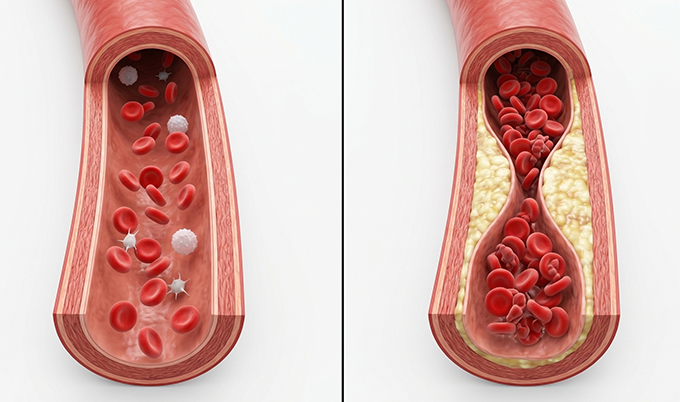
Atherosclerosis – the buildup of plaque in the arteries – doesn’t start calcified. It begins as soft, lipid-rich deposits that form silently in arterial walls over years. Calcification happens later, as plaque ages and hardens. A calcium score of 0 confirms that no aged, hardened plaque is present. Whether soft plaque is already forming is a separate question this test cannot answer.
This matters enormously for patients with active risk factors. The plaques most likely to rupture and trigger a heart attack are often soft and non-calcified. A 2024 case report in JACC: Case Reports documented a patient with a zero calcium score who had severe coronary stenosis – a 70-99% blockage – caused entirely by non-calcified plaque. The authors noted directly that “a lack of coronary calcification does not necessarily indicate an absence of atherosclerotic plaque.”
Calcium scoring is a powerful tool for what it was designed to find. The question worth asking is whether what it finds covers what you actually needed to know.
Who Is Most at Risk Despite a Zero Calcium Score
Age is the variable most often underweighted when interpreting a zero calcium score.
Younger patients with coronary artery disease tend to have predominantly non-calcified plaque – their disease simply hasn’t had decades to calcify. A review in the British Journal of Cardiology put it plainly: in adults under 40, a zero score doesn’t reliably exclude obstructive coronary artery disease. Younger patients with disease tend to carry mostly non-calcified plaque – and that’s exactly what the test can’t see. The “zero equals safe” interpretation was built around older patients with limited cardiovascular history; it loses reliability fast when that profile doesn’t match yours.
Age isn’t the only variable that shifts the interpretation. Each of the following risk factors changes how much weight a zero score should actually carry:
- Elevated LDL or non-HDL cholesterol – Lipid-driven atherosclerosis can produce significant non-calcified plaque burden before calcification begins. The MESA study showed that even with a zero calcium score, high non-calcified plaque loads remain a rupture risk. The score doesn’t neutralize what the lipids are doing. Advanced lipid testing – including apolipoprotein B and non-HDL cholesterol – provides a more complete picture than a standard panel alone.
- Strong family history of early heart disease – A parent or sibling with a heart attack before age 55 (men) or 65 (women) changes the risk calculation considerably, regardless of your calcium score.
- Diabetes mellitus – Diabetes accelerates atherosclerosis in ways that produce non-calcified plaque faster than calcification can catch up. The predictive value of a zero score drops when diabetes is in the picture.
- Hypertension – Persistently elevated blood pressure drives endothelial damage and early plaque formation, often in the non-calcified stage.
- Smoking history – Both current and former smokers carry elevated non-calcified plaque risk that a calcium score may not capture.
- Symptoms like chest pain or unexplained shortness of breath – For symptomatic patients specifically, JACC has noted that the “power of zero” interpretation requires particular caution. Symptoms change the clinical picture significantly. These early signs of heart disease deserve direct evaluation regardless of your calcium score.
If you check more than one of these boxes and received a zero calcium score, the score alone is not sufficient to close the conversation about your cardiac risk.
What the Research Says About Non-Calcified Plaque and Zero Scores
Three independent research groups have now reached the same conclusion: a calcium score of zero does not mean the coronary arteries are clean.
A large prospective cohort study published in PubMed examined 915 patients with zero calcium scores who also underwent coronary CT angiography. Among those patients, roughly 10% had non-calcified coronary artery disease visible only on the CT angiography scan – disease the calcium score entirely missed. About 2% had stenosis of 50% or greater in at least one coronary artery despite scoring zero on calcium.
Two percent sounds like a rounding error. In a cardiology practice seeing 500 patients per year with zero scores, that’s 10 people leaving with a significant undetected blockage and a follow-up appointment scheduled for five years out.
Research from the West Virginia University Heart and Vascular Institute, published in 2025, examined a high-risk symptomatic population with low calcium scores between 0 and 100. Among 1,050 patients reviewed, 37% had discrete non-calcified plaque identified only on CT angiography. The presence of that non-calcified plaque was an independent risk factor for future adverse cardiovascular events – including heart attack – even when the calcium score appeared low.
A separate MESA study analysis reinforced the point from a different angle: calcium scores are typically zero in younger patients not because they have no plaque, but because their plaque hasn’t calcified yet. As one of the study’s lead researchers noted, “that doesn’t mean they can’t still have a high plaque burden of noncalcified plaques which are still likely to rupture.”
Each research team reached the same place. A zero calcium score is a meaningful piece of data. A definitive cardiovascular clearance is a different thing entirely – and the difference matters most when clinical risk factors are present.
What to Do If You Have Risk Factors and a Zero Calcium Score

A calcium score of 0 doesn’t close the risk conversation for every patient. The five-year follow-up timeline assumes a baseline of low risk. When that baseline doesn’t match yours, the timeline needs review.
If your calcium score is zero but you have elevated cholesterol, a family history of early cardiac events, diabetes, or other significant risk factors, the conversation shouldn’t stop at the number. What that usually means is finding a physician with enough appointment time to actually sit with your full history – not file the score and move on.
In that conversation, several questions are worth raising:
- What is your non-HDL cholesterol and apolipoprotein B level? Standard lipid panels weren’t designed to catch all atherogenic risk. Apolipoprotein B in particular captures particle count data that a basic panel skips entirely.
- What does your family history suggest about your plaque development timeline? A first-degree relative who had a cardiac event in their 50s doesn’t just change the statistics – it suggests your atherosclerosis may be running on a compressed timeline. That’s a clinical question worth asking directly.
- Are you symptomatic in any way? Exertional chest discomfort, unexplained fatigue, shortness of breath on exertion – any of these shifts the clinical picture in ways a resting calcium score can’t capture.
- Would coronary CT angiography provide more useful information than calcium scoring alone? For patients with risk factors who scored zero, it often would. CT angiography sees non-calcified plaque directly. Calcium scoring doesn’t.
Reassurance is only useful when it’s warranted. A calcium score is one data point; your clinical picture is the full story. The goal is to confirm those two things are telling you the same thing.
How the Cleerly Heart Scan Addresses What Calcium Scoring Misses
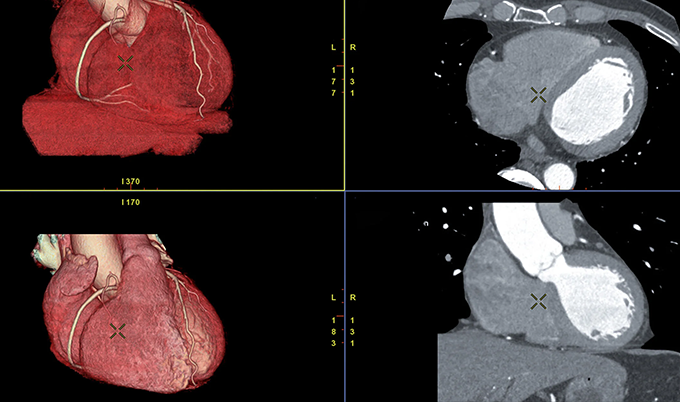
Patients who want a complete picture of their coronary artery status – not just the calcified portion – now have an option outside a hospital cardiology department. The Cleerly heart scan runs AI-powered analysis on coronary CT angiography images, identifying all plaque across the full spectrum – calcified, non-calcified, and low-density non-calcified – and characterizing the composition of each deposit to flag which lesions are most vulnerable to rupture.
That last part is what calcium scoring never reaches. Not the presence of plaque – the vulnerability profile of each individual deposit.
The practical difference from a standard calcium score:
- Calcium scoring detects calcified plaque only. It assigns a numerical score based on the density and volume of calcification found.
- Cleerly coronary CT angiography detects all plaque types – including the soft, non-calcified plaque that calcium scoring misses entirely – and characterizes each plaque by composition and rupture risk.
- Cleerly quantifies total plaque burden rather than just calcified deposits, providing a more complete picture of atherosclerotic disease stage.
- Results include a personalized cardiovascular risk assessment based on actual plaque data rather than population-based statistical models.
This level of detail is particularly relevant for patients who fall into the gap that calcium scoring doesn’t address well – people under 55 with risk factors, patients with elevated cholesterol who received a zero calcium score, and anyone with a family history suggesting early-onset coronary artery disease.
At our Tulsa and Tampa locations, Cleerly advanced cardiac imaging is available as a service for members who want to go beyond standard preventive screening. It’s included for Longevity members with a clinical indication, and available at a discount for Longevity members without one who simply want the screening, as well as at a discount for members on other plans. It’s one of the few places in the region where this technology is accessible outside a traditional hospital or specialty cardiology referral pathway.
Frequently Asked Questions About a Calcium Score of 0
Is a calcium score of 0 good?
A calcium score of 0 is a positive finding – it means no calcified plaque was detected in your coronary arteries. For many people, especially those without significant cardiovascular risk factors, it does indicate low near-term cardiac risk. The important caveat: calcium scoring only detects calcified plaque. If you have risk factors like elevated cholesterol, diabetes, or a family history of early heart disease, a zero score does not rule out the presence of non-calcified plaque, which carries its own rupture risk.
Can you still have a blockage with a calcium score of 0?
Yes. Research shows approximately 2% of patients with a calcium score of 0 have coronary stenosis of 50% or greater when evaluated by coronary CT angiography – a more detailed imaging test. That blockage is caused by non-calcified plaque, which is invisible to standard calcium scoring. This pattern is more common in younger patients and those with established risk factors whose atherosclerosis hasn’t had decades to calcify.
Do I need statins if my calcium score is 0?
Most guidelines do support deferring statin therapy in intermediate-risk patients with a calcium score of 0. The exception category is real, though. Elevated LDL, a strong family history of early cardiac events, diabetes, or other high-risk features all push toward treatment regardless of calcium score. A physician who knows your complete lipid panel and history can give a far clearer answer than the score alone.
How many people have a calcium score of 0?
Roughly 40-50% of people who undergo coronary artery calcium screening receive a score of zero. That percentage drops significantly with age and as cardiovascular risk factors accumulate. Among adults over 65, a zero calcium score is considerably less common. Among younger adults with minimal risk factors, it’s more prevalent.
How often should I recheck my calcium score if it’s 0?
Most guidelines suggest a repeat calcium score in 5 years if your initial score is zero and you have no significant risk factors. If you do have risk factors – elevated cholesterol, hypertension, diabetes, or a family history of early heart disease – your physician may recommend a different timeline, or a different imaging approach entirely. For patients carrying two or more risk factors, coronary CT angiography may provide more actionable information than a repeat calcium score.
Why DPC Makes This Conversation Possible
The barrier between most patients and the right cardiac workup is time – specifically, the lack of it.
In a traditional primary care setting, a physician working through insurance billing constraints has roughly 10 minutes per visit. Working through the nuances of what a calcium score of 0 means in the context of your specific lipid profile, your family history, and your symptom pattern takes longer than that. The default path is to take the zero at face value and schedule a follow-up in five years.
Physicians working within these constraints are doing what the system allows. The constraint is the system itself.
Direct primary care changes that structure. At Craft Concierge, appointments run 30-60 minutes. There’s no insurance gatekeeping between you and the diagnostic conversation you need. If a deeper cardiac workup is warranted based on your full clinical picture, we can order it, interpret it, and work through the results with you – without a referral queue or a billing code standing in the way.
If you’ve been handed a calcium score of 0 and sent home with a five-year follow-up, and you still have the same risk factors you walked in with, that zero hasn’t changed your underlying profile. It just hasn’t detected it yet. Members who want advanced cardiac screening beyond standard calcium scoring can access the Cleerly heart scan through our Tulsa and tampa location.
The Right Way to Read a Zero Calcium Score
A zero calcium score is one piece of a larger picture. Treated as the whole picture, it can provide false reassurance in exactly the patients who need the most scrutiny.
For a healthy 60-year-old with no significant risk factors, a zero calcium score is genuinely reassuring and likely warrants no immediate further workup. For a 45-year-old with a family history of early heart disease, elevated non-HDL cholesterol, and a calcium score of 0, that number deserves more scrutiny – not alarm, but honest clinical curiosity about what might be developing in the non-calcified space.
Non-calcified plaque is real. Current imaging technology can measure it, and it carries rupture risk regardless of what a calcium score shows. Patients with risk factors and a zero score are not necessarily safe – they may simply have disease that calcium scoring cannot see.
If you have cardiovascular risk factors and a calcium score of 0, the most valuable thing you can do is talk with a physician who has time to review your full picture – and access to imaging that goes beyond calcification detection when the clinical case warrants it.
If you’re in the Tulsa area, we’d welcome that conversation. Schedule a meet-and-greet at Craft Concierge – no commitment required, just the kind of extended, unhurried time with a physician that makes these conversations possible.
This article is for informational purposes only and does not constitute medical advice. Always consult a qualified physician for personalized guidance about your cardiovascular risk and appropriate screening tests.